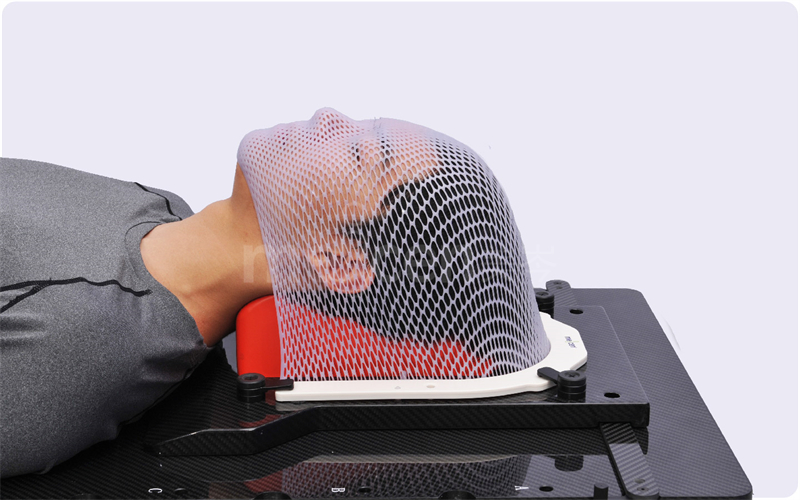

Storage Management Guidelines for Radiotherapy Thermoplastic Immobilization Masks
Core Overview
Thermoplastic immobilization masks are critical consumables for precise patient fixation and reproducible positioning in modern radiotherapy. Improper storage will damage the material’s thermoplastic memory performance, increase shrinkage rate, weaken fixation strength and stability, and even render the masks completely unusable.
Key Storage Guidelines
Some patients may experience temporary discomfort from the tight fit or anxiety/claustrophobia due to the need to remain still. Communication with the clinical team and relaxation techniques or use Open-face thermoplastic mask instead can help manage these feelings.
Temperature Control
- Recommended stable ambient temperature: 15–25°C
- Keep away from direct sunlight, and store products at least 0.5 meters from heat sources
- Avoid heating equipment to prevent frequent temperature fluctuations
Humidity Control
- Safety standard: Relative humidity below 60%RH
- Do not store near water sources, and ensure adequate ventilation
- Use dry rooms or dehumidifiers, especially in humid seasons
Inventory Management
- Follow the First-In, First-Out (FIFO) principle to reduce material waste
- Keep masks sealed in original packaging to avoid oxidation and dust contamination
- Store flat, and prohibit folding or heavy compression to prevent permanent deformation
- Regularly inspect package and mask surface integrity, and use within the 24-month shelf life
Common Storage Errors & Corrective Measures
| Common Error | Consequence | Corrective Action |
| Storing near heat sources | Accelerates material aging | Store masks in a constant-temperature room |
| Folding or compressing mask sheets | Causes permanent deformation | Always store flat |
| Neglecting environmental monitoring | Undermines performance consistency | Conduct regular environment inspections |
Value of Standardized Storage
- Effectively mitigate risks of mask aging and failure
- Greatly improve the success rate of one-step molding, reduce clinical rework and material loss
- Optimize department operational efficiency, and reduce supplier disputes arising from consumable quality issues
- Support an efficient and stable radiotherapy workflow